
Behind every statistic is a story many of us are still afraid to tell.
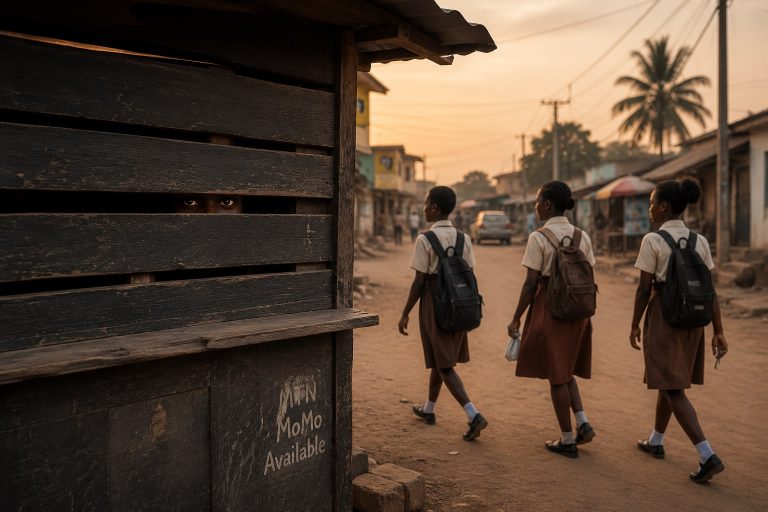
Ama wipes the sweat from her forehead as she walks quickly down the road.
For weeks now, something hasn’t felt right.
The tiredness won’t go away.
The headaches come and go.
Some days she wakes up already exhausted.
She tells herself it’s nothing.
Stress. Malaria. The heat.
Her phone buzzes.
“Where are you? Did you get it?” Efua texts.
A tro tro slows down beside her.
“Osu! Osu!”
She climbs in and sits by the window.
Outside, life is moving.
Music playing. People laughing. Bread sellers shouting.
But inside her mind, everything feels… different.
She looks down at the envelope in her hand.
Suddenly, all the small symptoms she ignored feel louder.
Ama’s story might sound fictional.
But the reality behind it isn’t.
Because Ama is not just one person.
She could be anyone.
A woman.
A man.
Someone you know.
Or even you.
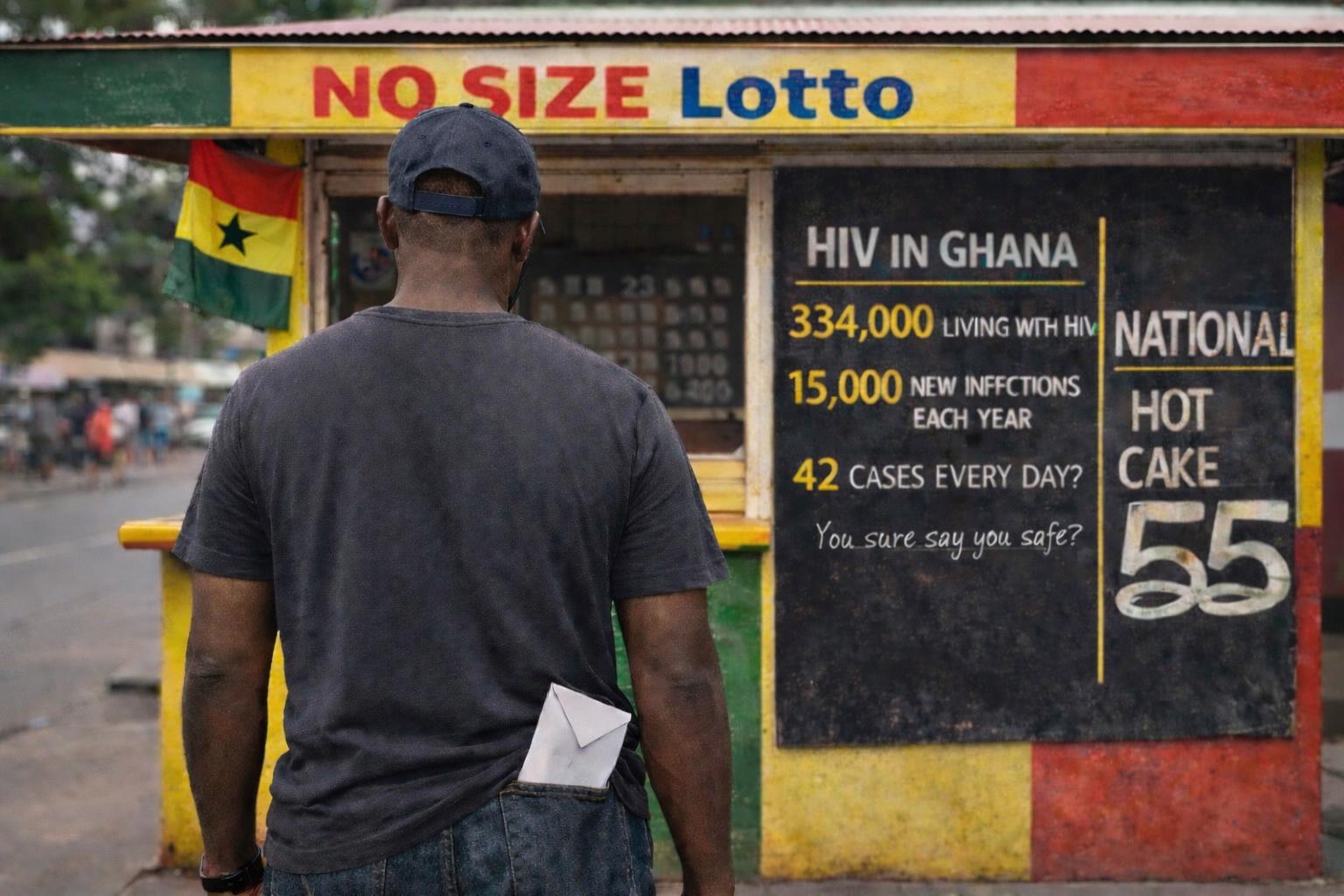
Right now in Ghana, over 334,000 people are living with HIV.
Around 15,000 new infections happen every year.
That’s about 42 people every single day.
Not in theory.
In real life.
For most people, the moment isn’t dramatic.
It’s quiet.
An envelope.
A thought you can’t shake.
Here’s the part we don’t always talk about.
More testing means more people are being diagnosed.
And that’s actually progress.
Because you can’t treat what you don’t know.
Today, HIV is not a death sentence.
With treatment, people can live long, normal lives.
But the real problem isn’t just the virus.
It’s what people don’t understand about it.
HIV is passed through certain body fluids like blood and during unprotected sex.
But it cannot be spread through:
Sitting next to someone
Sharing food
Hugging
And yet, the fear is still there.
Because where there’s no clear information,
people fill the gaps with assumptions.
And the impact isn’t equal.
Women make up nearly 68 percent of people living with HIV in Ghana.
Young people are also one of the fastest growing groups in new infections.
So we have to ask:
Are young people actually getting information that makes sense to them?
Are we speaking in ways they understand?
Because most campaigns use English.
But real life sounds like:
Twi
Ga
Ewe
Fante
Pidgin
In Ghana, we talk about everything.
Music.
Football.
Politics.
But sex?
Still quiet.
Still awkward.
Still avoided.
Now here’s the part we don’t like to say out loud.
A significant number of young people are still having unprotected sex.
And even worse…
People are now “testing” for STIs with their eyes.
“If they look clean, then they’re fine.”
“If they don’t look sick, then it’s safe.”
That mindset?
That’s how things spread.
Because you cannot see HIV.
You cannot see most STIs.
Meanwhile, these numbers are not a joke at all:
• 334,000 people living with HIV
• 15,000 new infections each year
• 42 new cases every day
And here’s something else…
Not everyone knows their status.
When was the last time you checked?
Or because you no see symptom, you figga say everything be alright?
And because of stigma, some people do know… but stay silent.
So the risk doesn’t just come from “strangers.”
It can come from people we trust.
And behind every number… is someone like Ama.
Or someone like you.
As the Akan proverb says,
“Nokware yɛ duru” — the truth is heavy.
But silence is heavier.
Because somewhere in Accra tonight,
someone is sitting in a tro tro…
holding an envelope,
that carries a conversation many of us are still afraid to have.
Want to get tested or speak to someone?
Visit our resource page for trusted clinics and support services across Ghana.