
In Ghana, many children are warned long before they are protected.
Girls are told to sit properly, dress properly, stop smiling too much, stop talking to boys, and not bring shame home. Then puberty comes, and the language changes. “Her body has developed.” “She knows what she is doing.” “These girls of nowadays are too fast.” As if a child controls how her body forms. As if puberty is consent.
But a girl’s body developing is not consent. A child’s appearance is never an invitation. And one of the most dangerous things Ghana continues to do is blame children, especially girls, for the behaviour of adults. Instead of asking why a grown man is watching, touching, or pursuing a girl, people ask what she was wearing, or whether she “brought it upon herself.” She did not. A child does not cause abuse by growing up.
Boys can be caught in the crossfire too — targeted by older women, older men, teachers, neighbours, relatives. The difference is that when it happens to boys, society often laughs or treats it like something to brag about. Abuse against boys is too often hidden behind jokes.
This is not a small issue. A 2016 domestic violence survey found that about 38% of girls aged 15–19 in Ghana had experienced at least one act of sexual abuse in the previous 12 months. Another study found that 32.5% of girls aged 13–19 experienced sexual abuse during the pandemic — 3 in 10 girls. And sexual abuse in Ghana is severely underreported, which means the real scale is likely even worse.
So when we talk about child sexual abuse in Ghana, we are talking about something structural. It shows up in homes, schools, churches, transport stations, family circles. It shows up as silence, as shame, as the ways adults protect and excuse each other while teaching children to carry the blame.
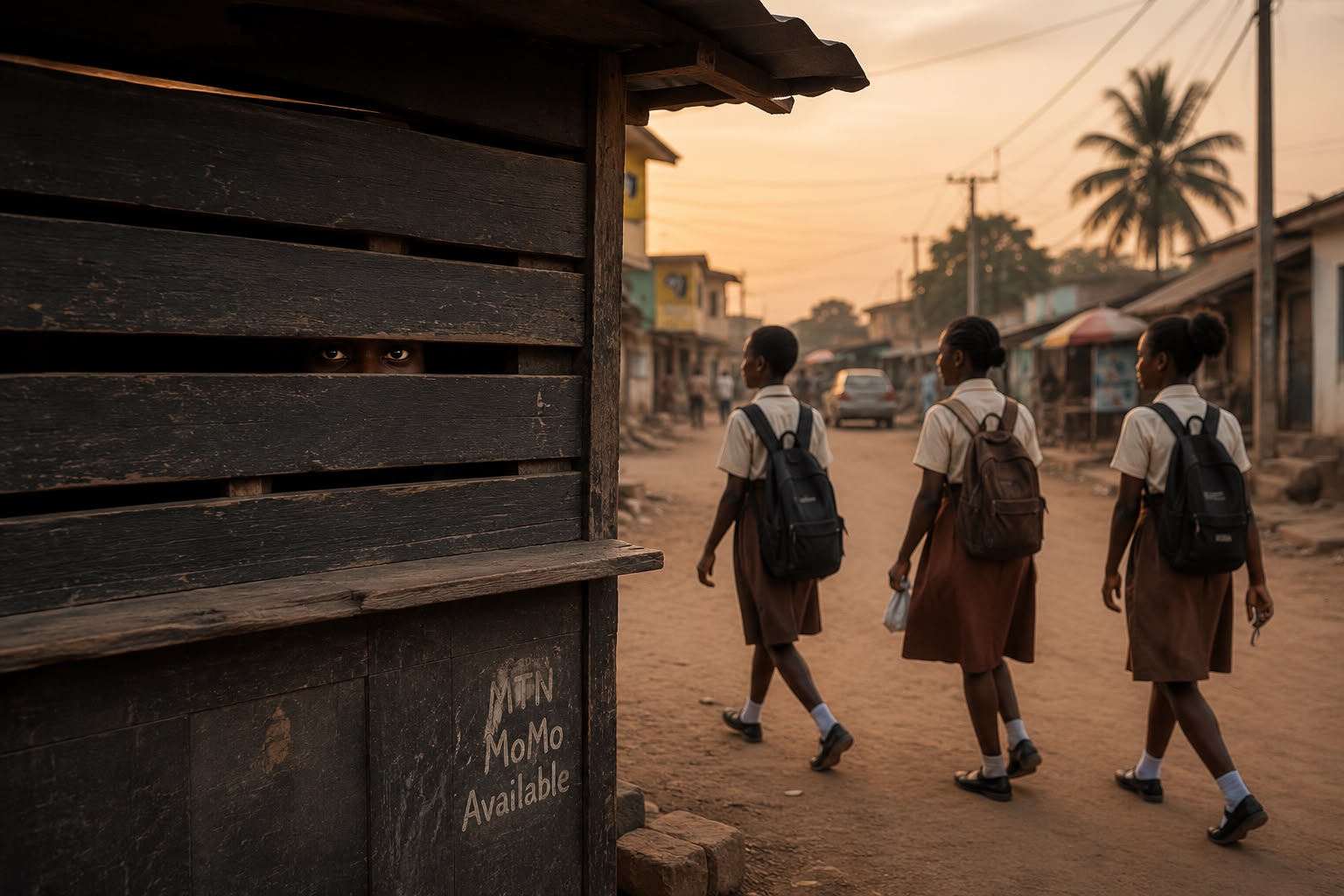
Schools are one of the clearest examples. They’re supposed to be places of safety, but they can also become places where power is abused. In Ghana, teacher-student sexual misconduct is too often softened with words like “relationship” or “affair.” But when one person controls your grades, discipline, and sense of safety, that is not romance — that’s a power imbalance. Even where a student appears to agree, the authority a teacher holds makes genuine consent deeply compromised.
We’ve already seen this exposed at higher levels too. The University of Ghana sex-for-grades scandal forced a wider public conversation after BBC Africa Eye’s undercover investigation exposed lecturers harassing women students — showing how easily academic spaces protect reputation over students.
The law matters here. In Ghana, sex with a child below 16 is defilement, and the legal age of consent is 16. But that legal line doesn’t erase the reality that many young people aged 16 to 18 are still vulnerable to grooming and manipulation — especially when the adult involved is a teacher, guardian, or someone with money and power. A legal threshold is not the same thing as safety.
And the normalisation doesn’t stop at homes, schools, or the law. It lives in culture too — in what we sing, what we laugh at, what we repeat without thinking.
That’s why songs like Obour’s “Aboa Konkontiba” and Mzbel’s “16 Years” deserve attention. Konkontiba is remembered for the line “catch them young and they should be yours forever” — a mentality that has harmed children for generations: younger means easier to control, easier to claim. Mzbel’s “16 Years,” widely described as a response to Konkontiba, pushed back — putting words in the mouth of the girl herself, drawing a line, threatening to report sexual touching to her mother. The song touched a nerve because it brought a familiar reality into public hearing.
That’s what makes these songs worth discussing. Ghana has long known this issue, joked about it, argued about it, and turned it into music before always turning it into protection.
And that’s why voices disrupting the silence matter now. On TikTok, Deeafuaa has been speaking openly about the exploitation of young girls in Ghana through #youngbutnotyours. The hashtag is simple, but powerful. Young does not mean ready. Young does not mean interested. And young certainly does not mean yours.
If Ghana is serious about protecting children, we need to stop blaming children for adult behaviour. Stop acting like a developing body is an invitation. Stop calling abuse a relationship just because it’s common. Stop laughing when boys are exploited. Stop excusing teachers, older men, older women, and authority figures because “these things happen.”
These things happen because we let them happen.
A child is not “fast.”
A schoolgirl is not a temptation.
A schoolboy is not lucky.
A developing body is not consent.
And young is not yours.