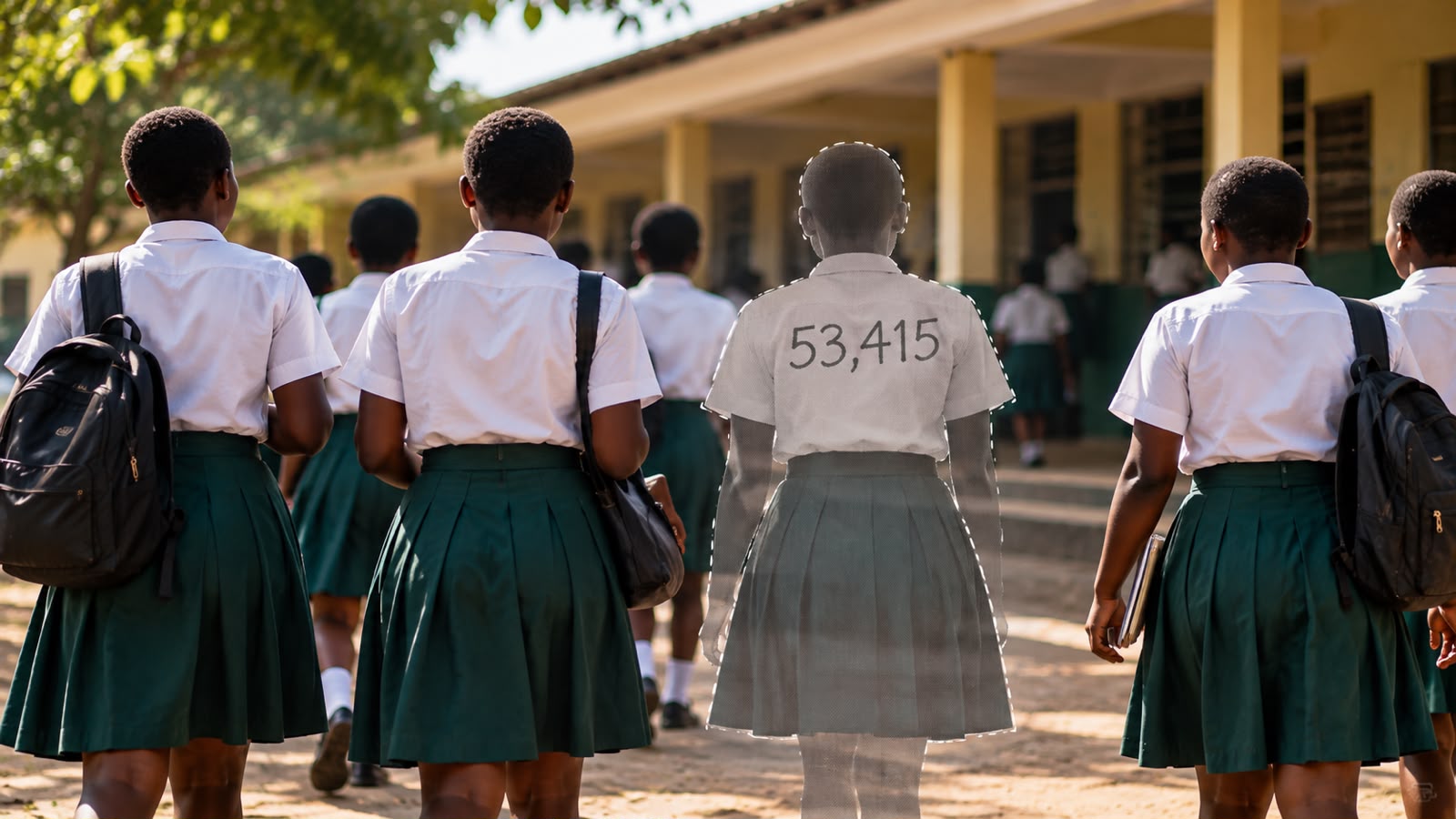

Fifty three thousand, four hundred and fifteen. That’s how many teenage pregnancies were recorded across Ghana in just the first seven months of this year, according to the Ghana Health Service. Sit with that number for a second. That’s not a statistic tucked away in a report nobody reads, that’s over 7,000 girls a month, every month, since January, whose lives just changed in ways many of them weren’t ready for.
Sheriffa Mohammed, who heads the adolescent health program at Ghana Health Service, has been direct about it, keeping girls in school remains one of the strongest protections we have. Clara Nyarko, Programmes Director at MSI, has said something worth repeating too, this isn’t simply a health issue, it’s one that needs coordination, collaboration, and actual accountability if we want to protect girls’ futures.
I agree with both of them. But I want to push the point further, because I think we already know coordination is missing. What I don’t think we’re saying loudly enough is why the information gap still exists in 2026, after all the campaigns, all the NGOs, all the workshops.
It’s not because the knowledge doesn’t exist somewhere. WHO Ghana has spent this year specifically reworking how sexual and reproductive health information gets communicated to adolescents, because the materials that already exist aren’t landing. Dr Katherine Attoh at WHO Ghana put it plainly, adolescents are navigating misinformation and stigma, and if the information doesn’t reflect their actual realities, it doesn’t matter how technically accurate it is, it won’t have impact. A separate EU and MSI-funded project that just wrapped up across Ghana’s Northern and Upper East regions found the same thing after three years on the ground, stigma and fear of judgement are still the biggest reasons young people don’t access the sexual health services already sitting there waiting for them.
So the problem was never really about access to clinics. It’s about whether a girl feels safe enough to walk into one. It’s about whether the adults around her create room for her to ask a question before something happens, instead of only reacting loudly after.
This is exactly why I built Chale, Protect Yourself the way I did. Not as a clinic, not as a curriculum handed down from above, but as a space where the shame gets taken out of the conversation before the conversation even starts. Because you can put a reproductive health corner in every school in the country, and it won’t matter if the girl walking past it has already learned that asking questions about her own body makes her look “fast,” or “loose,” or like she’s inviting trouble.
53,415 isn’t a number we get to look away from. And if the official response from Ghana Health Service and WHO is essentially “the information needs to change, the approach needs to change,” then that’s not a call for another report. That’s a call for exactly the kind of work platforms like this one exist to do.
We can’t keep doing this the same way. Not with numbers like these. Not while girls are still learning that silence is safer than asking.